Expert Opinion
Mental Health Assessment
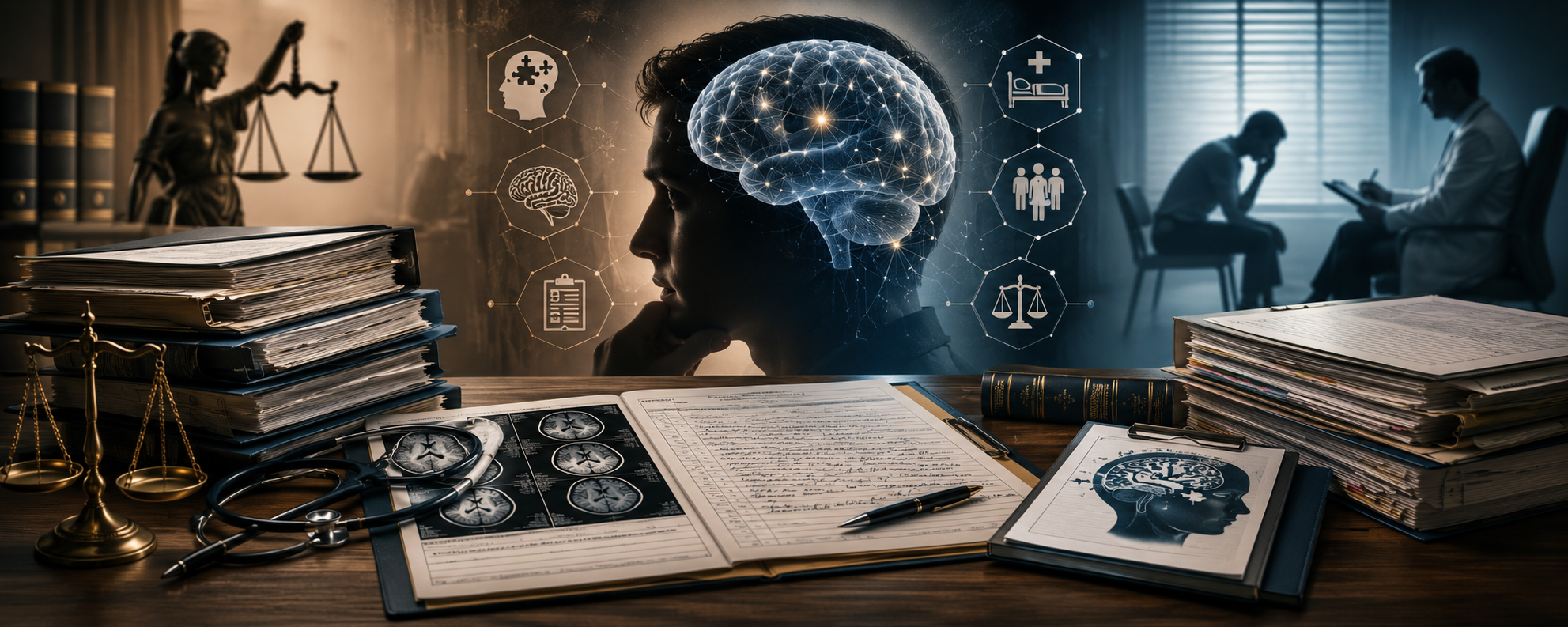
Forensic mental health assessments evaluate a person's mental and cognitive state at a specific point in time — typically the date of a legal transaction or alleged offence — to determine its legal or criminal consequences. Such assessments are most commonly conducted retrospectively, based on available documentation.
Areas of Assessment
Civil Capacity
Whether a person had the mental capacity to enter into a legal transaction — contract, power of attorney, will, sale or gift — at the relevant time. Assessed against the presence of mental illness, cognitive impairment or intellectual disability.
TMK Art. 13–15 · Capacity and legal consequences
Criminal Responsibility
Whether the person had the ability to perceive the legal meaning and consequences of their conduct, and to direct their behaviour accordingly, at the time of the alleged offence. Includes the effect of mental illness, temporary incapacity and substance influence.
TCK Art. 31 · TCK Art. 32 · TCK Art. 34
These assessments are typically conducted retrospectively — after the relevant transaction or event — and are necessarily limited by the scope and quality of available documentation.
Documents Typically Required
For preliminary assessment
All psychiatric and neurology records
Outpatient treatment, medication and follow-up records
Complete inpatient records (daily observation and examination notes)
Psychological testing and cognitive assessments
Guardianship, restriction or medical board reports, if any
Records from around the date of the transaction or event
Prior forensic or medical opinions
Party, witness and family statements
The transaction document itself (contract, will, power of attorney)
Incident records, statements and investigation documents (criminal cases)
Legal BasisTMK Art. 13–15 (legal capacity) · TCK Art. 31 (juvenile criminal responsibility) · TCK Art. 32 (mental illness) · TCK Art. 34 (temporary incapacity/substance influence) · HMK Art. 293 · CMK Art. 67/6 · CMK Art. 68/3